If your mood, energy, and sleep slide every fall and only lift when spring arrives, you may be dealing with seasonal depression. The clinical name is seasonal affective disorder (SAD), and it is a real form of depression, not a lack of willpower. Cleveland Clinic estimates that about 5% of US adults experience it, usually starting between ages 18 and 30.
Below are the symptoms, why Northeast winters hit hard, which treatments have solid evidence, and how to get help mid-winter or plan for next fall.
If you are in crisis or thinking about harming yourself, call or text 988 (Suicide and Crisis Lifeline). If there is immediate danger, call 911.
Seasonal Depression Is a Seasonal Pattern in Depression or Bipolar Disorder
Psychiatrists do not diagnose "seasonal depression" as a separate illness. In the DSM-5-TR, the diagnostic manual clinicians use, "with seasonal pattern" is a specifier, a label added to an existing diagnosis: recurrent major depressive disorder, bipolar I disorder, or bipolar II disorder. The episodes meet the usual criteria for that condition. What sets them apart is the timing.
In bipolar I or II disorder, a person must first meet the criteria for bipolar disorder, and the label describes a regular yearly timing in mood episodes, such as depression every winter. This matters because light therapy and antidepressants need extra caution in bipolar disorder.
For seasonal depressive episodes, a clinician looks for:
- Depressive episodes that start at a predictable time of year, most often fall or winter
- Full recovery, or a clear drop in symptoms, at a predictable time of year, usually spring
- This pattern in each of the past two years, with no non-seasonal depressive episodes in that time
- Seasonal episodes that clearly outnumber non-seasonal ones across your life
That is the core of "seasonal depression vs depression." Depressive episodes in both July and January point to recurrent depression without a seasonal pattern, which changes the plan.
Winter blues and seasonal affective disorder are not the same
Feeling flat when it gets dark at 4:30 pm is common. Cleveland Clinic estimates that 10% to 20% of people in the US get a milder form called the "winter blues." The difference is how much symptoms get in the way.
| Winter blues | Seasonal affective disorder | |
|---|---|---|
| Mood | Lower, but you still enjoy things | Low most of the day, nearly every day |
| Function | Work, school, and relationships stay on track | Daily life starts to slip |
| Duration | Comes and goes | Lasts weeks to months, returns yearly |
| Safety | No hopelessness or suicidal thoughts | Hopelessness or thoughts of death can occur |
Seasonal Depression Symptoms to Watch For
Seasonal depression symptoms include the core signs of depression: persistent low mood, loss of interest in things you usually enjoy, low energy, trouble concentrating, and feelings of guilt or hopelessness. According to the National Institute of Mental Health, symptoms typically last about four to five months a year.
Winter depression symptoms
The winter pattern is far more common. It often adds:
- Oversleeping and still waking up tired
- Heavy, sluggish arms and legs
- Carbohydrate cravings and weight gain
- Pulling away from friends, family, and plans
For many people, December through February are the hardest months.
Summer-pattern symptoms
A smaller group has depression that starts in late spring or early summer and lifts in fall. It looks more restless than sluggish: insomnia, poor appetite with weight loss, agitation, anxiety, and sometimes irritability or aggressive behavior.
Anxiety in the fall
"Autumn anxiety" is a popular term, not a diagnosis, but anxiety and irritability are listed SAD symptoms. If fall brings worry along with low energy and sleep changes, mention both to a clinician.
Why Winter Hits Hard in New York, New Jersey, and Pennsylvania
SAD tends to be more common farther from the equator, though the US data are old. A 1990 mailed-questionnaire study of adults in four areas (Sarasota, Florida; Montgomery County, Maryland; New York City; and Nashua, New Hampshire) found winter SAD significantly more common at the northern sites.
The NIH StatPearls review of SAD (updated April 2024) cites older US survey data showing rates from about 1.4% in Florida to 9.7% in New Hampshire, and notes the US figures are dated. Overall estimates also depend on method, ranging from 1% to 10%. New York, New Jersey, and Pennsylvania sit much closer in latitude to New Hampshire than to Florida.
Daylight shows why. New York City gets about 15 hours of daylight in late June but roughly 9 hours and 15 minutes at the December solstice, with sunset around 4:30 pm. Philadelphia and Pittsburgh, at a similar latitude, see a similar drop. When clocks fall back on the first Sunday in November, evening light disappears overnight, and many people commute both ways in the dark for much of the winter.
What Causes Seasonal Affective Disorder
The exact cause is unknown, but research points to:
- Body clock disruption. Less light can throw off your circadian rhythm.
- Serotonin. Levels of this mood-related brain chemical may drop with less sunlight.
- Melatonin. Longer nights may lead to more melatonin, the hormone that makes you sleepy.
- Vitamin D. Your skin makes less of it in winter, and low levels are common in people with winter-pattern SAD.
Who is at higher risk
- Women, who are diagnosed more often than men
- Younger adults, since onset is usually in early adulthood
- People with a family history of depression or SAD
- People who already have major depression or bipolar disorder, especially bipolar II
- People with ADHD, anxiety, panic disorder, or eating disorders
- Anyone living far north or south of the equator
How Seasonal Depression Is Diagnosed
No blood test or scan confirms SAD. A clinician makes the diagnosis by reviewing your symptoms, past episodes and their timing, and family history. A thyroid test may be ordered to rule out medical causes.
Bring a simple timeline: when your mood usually drops, when it lifts, and how your sleep, appetite, and energy change. Some people find their low mood runs all year, a picture closer to high-functioning depression.
Seasonal Depression Treatment Options With Good Evidence
Treatment often combines the approaches below, based on severity and your medical history.
Light therapy for seasonal depression
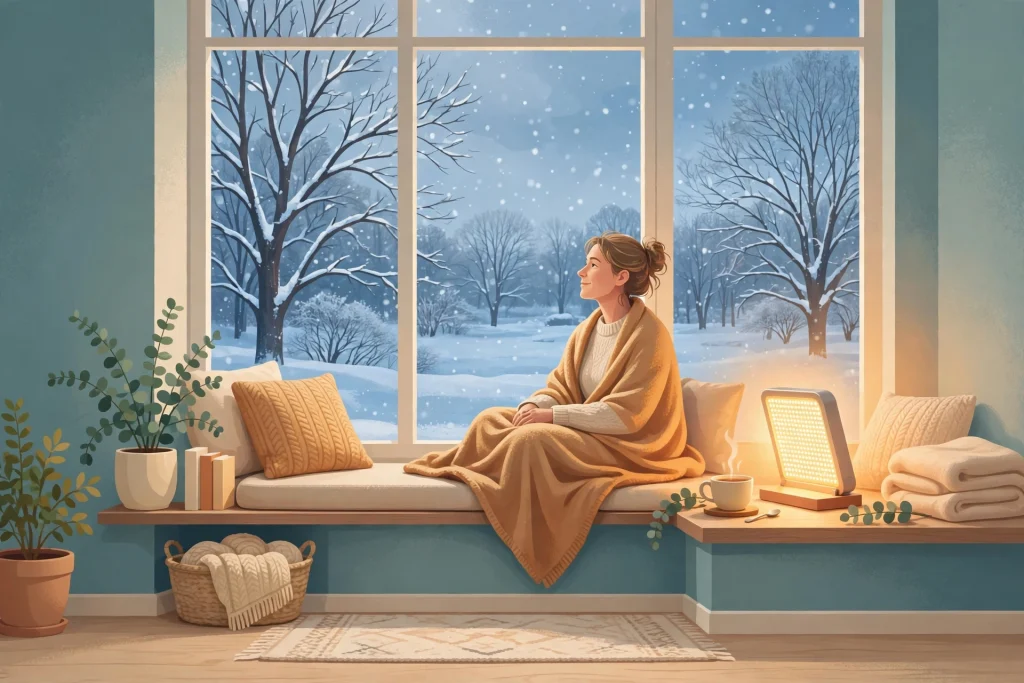
Light therapy is one of the main treatments for winter-pattern SAD, and it can start mid-season.
Screen for bipolar disorder first. Light therapy and some antidepressants can trigger hypomania or mania in people with bipolar disorder. Before starting either, ask a clinician to check for bipolar disorder, especially if you have had stretches of unusually high energy, little need for sleep, or racing thoughts.
The right distance and session length depend on the specific device, so follow the manufacturer's instructions and your clinician's guidance. Typical ranges from major sources:
- Brightness: Commonly 10,000 lux, with UV light filtered out, about 20 times brighter than indoor light.
- Timing: Usually in the morning, within the first hour after waking. Using it late in the day can cause insomnia.
- Duration: Often about 20 to 30 minutes a day at 10,000 lux. Published guidance ranges from about 15 to 45 minutes.
- Distance: Varies by device. Mayo Clinic cites 16 to 24 inches and Cleveland Clinic cites 2 to 3 feet. The light should reach your eyes indirectly; do not stare into it.
- Season: Daily through the months your symptoms usually last. Symptoms can come back quickly if you stop.
Some people improve within days; full benefit often takes two to three weeks. Side effects are usually mild: eyestrain, headache, irritability, or trouble sleeping. Talk with a clinician before you start if you have an eye or retina condition, diabetes, or take medication that makes you sensitive to light.
Cognitive behavioral therapy for SAD
CBT-SAD is cognitive behavioral therapy adapted for seasonal depression. NIMH describes it as two group sessions a week for six weeks, focused on challenging negative thoughts about winter and scheduling activities that bring back a sense of enjoyment. In a head-to-head study, it worked as well as light therapy, and a longer follow-up found its benefits lasted longer. If winter brings a loop of discouraging thoughts, that pattern is called rumination, and challenging those thoughts is part of CBT-SAD.
Medication
Antidepressants are a common part of depression treatment, and SSRIs are often used for SAD, alone or with light therapy. Most take several weeks to reach full effect, so regular medication management visits let your prescriber track side effects and adjust the plan. For background, see how SSRIs and SNRIs differ.
One medication has a specific FDA approval here. The Wellbutrin XL prescribing information (extended-release bupropion) lists an indication for preventing seasonal major depressive episodes in people diagnosed with SAD. The label calls for starting it in autumn, before symptoms begin, continuing through winter, and tapering in early spring under a prescriber's direction. Like all antidepressants, it carries a boxed warning about suicidal thoughts in young people, so close follow-up matters. Never start, stop, or change a medication on your own; talk with your prescriber first.
Vitamin D: the evidence is mixed
Low vitamin D is common in winter depression, but supplement studies disagree: some found a benefit, others found none. It is not a stand-alone treatment, and vitamin D can interact with some medications, so ask your clinician before adding it.
A Bipolar Pattern Changes the Plan
Some people with bipolar disorder become depressed in fall and winter, then shift into hypomania or mania in spring and summer. That is why screening comes before light therapy or antidepressants, and the bupropion label tells prescribers to screen for bipolar disorder first.
If spring brings unusual energy, little need for sleep, racing thoughts, or impulsive spending, tell your clinician. A psychiatrist who treats bipolar disorder can tell a seasonal bipolar pattern apart from recurrent depression and plan care for both seasons. Our guide to bipolar depression vs. depression explains the signs that point toward bipolar disorder.
Self-Care Helps, but Some Signs Mean It Is Time to Get Help
For milder winter symptoms, daily habits help:
- Get outside in the morning, even on cloudy days
- Keep a consistent wake time, including weekends
- Exercise regularly, aiming for at least 30 minutes three times a week
- Plan social time ahead so it does not depend on your mood
- Limit alcohol, which worsens depression and interacts with antidepressants
See a clinician if low mood lasts most days for two weeks or longer, you have lost interest in things you enjoy, your sleep or appetite has clearly changed, you are using alcohol to cope, or work, school, or relationships are slipping. Hopelessness or thoughts of death call for help right away: call or text 988 any time.
Midwinter is not too late to start
If you are reading this in January, February, or March, you do not have to wait for spring. Light therapy, CBT, and antidepressants can all begin mid-season. The bupropion XL indication covers prevention started in autumn, so treating symptoms that have already begun is a separate conversation with your prescriber.
Planning Ahead for Next Fall
Seasonal depression is predictable, so you can act before it starts. With your clinician, you might plan to:
- Start light therapy in early fall, before your usual onset (Cleveland Clinic suggests September if symptoms usually start in October)
- Discuss preventive medication if past winters were severe
- Book a late-summer check-in to set the plan
Frequently Asked Questions About Seasonal Depression
Is seasonal depression real?
Yes, seasonal depression is a real, diagnosable condition, not just a dislike of cold weather. Clinicians diagnose it as major depressive disorder or bipolar disorder with a seasonal pattern, meaning episodes return at the same time of year for at least two years in a row. The symptoms meet the same criteria as other depressive episodes, and they can be treated.
When does seasonal depression start?
For most people, seasonal depression starts in late fall or early winter and lifts in spring or summer. A less common summer pattern begins in late spring or early summer and eases in fall. The condition usually first appears in young adulthood, most often between ages 18 and 30, and then tends to return around the same time each year.
What is the best way to combat seasonal depression?
The best way to combat seasonal depression is a plan matched to how severe it is, usually built on light therapy, cognitive behavioral therapy, an antidepressant, or a combination. Daily habits such as morning light, a steady wake time, and regular exercise support those treatments. A clinician should screen for bipolar disorder before light therapy or an antidepressant begins.
When should you start light therapy for seasonal depression?
If you have had seasonal depression before, light therapy is often started in early fall, before your symptoms usually begin. If symptoms have already started, you can still begin after a clinician checks for bipolar disorder and any eye conditions. Sessions are usually done in the morning, within the first hour after waking, every day through your usual low season.
How long does light therapy take to work?
Light therapy often starts to help within a few days, but full benefit usually takes about two to three weeks of daily use. Cleveland Clinic says people often see results within two to four days, and an NIH review says response is generally seen after two to three weeks. Results depend on daily use, and symptoms can return quickly if you stop.
Is it too late to start treatment in the middle of winter?
No, it is not too late to start treatment in the middle of winter. Light therapy, cognitive behavioral therapy, and antidepressants can all begin mid-season, so you do not have to wait for spring to feel better. Starting now also shows what works for you, which makes planning for next fall easier.
Is vitamin D enough to treat seasonal depression?
No, vitamin D alone is not considered enough to treat seasonal depression. Low vitamin D levels are common in winter-pattern SAD, but studies of supplements have produced mixed results, and an NIH review calls its value as a stand-alone treatment inconclusive. Ask your clinician before adding it, since vitamin D can interact with some medications.
Can you prevent seasonal depression before fall starts?
If you have had seasonal depression before, starting a plan in late summer or early fall may help prevent an episode or make it milder. Bupropion XL is FDA approved to prevent seasonal depressive episodes when a prescriber starts it in autumn, and some clinicians start light therapy before the usual onset. Research on prevention is still limited, so set the plan with a clinician.
Get Help for Seasonal Depression in NY, NJ, or PA
Help is available mid-winter or before your usual low season. A board-certified psychiatrist can evaluate your symptoms, check for a seasonal or bipolar pattern, and manage medication with supportive CBT techniques, all through online psychiatry visits by telehealth. If you live in New York, New Jersey, or Pennsylvania, book a free 15-minute consultation to talk through your options.